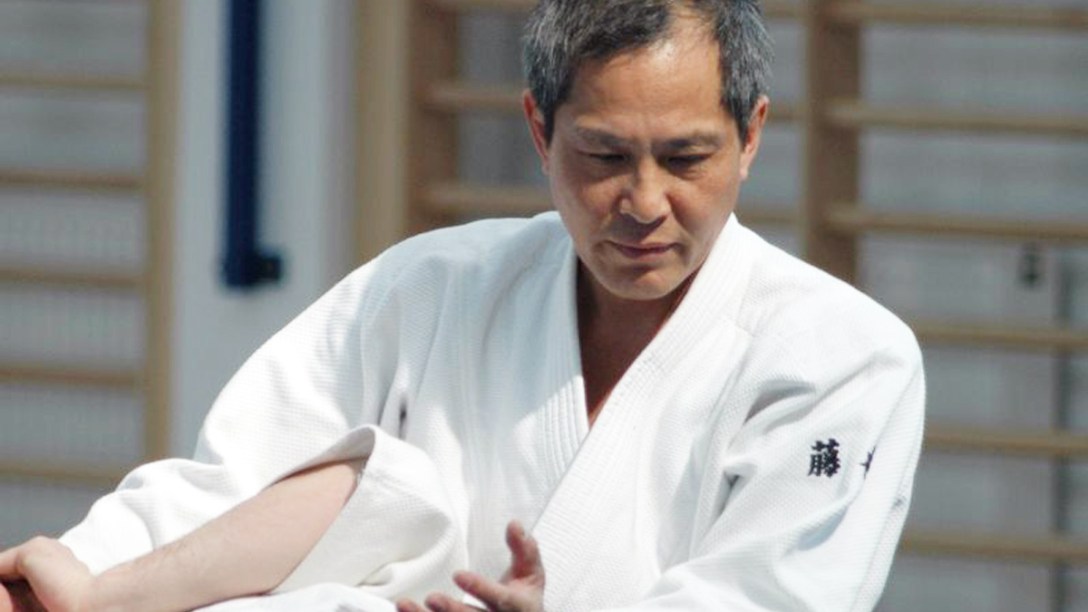
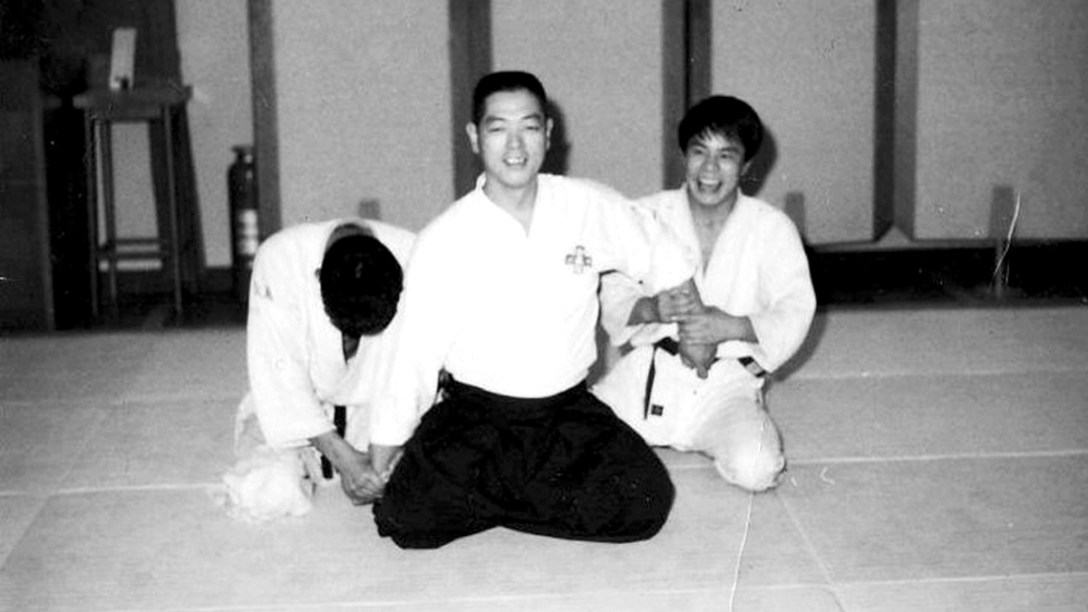
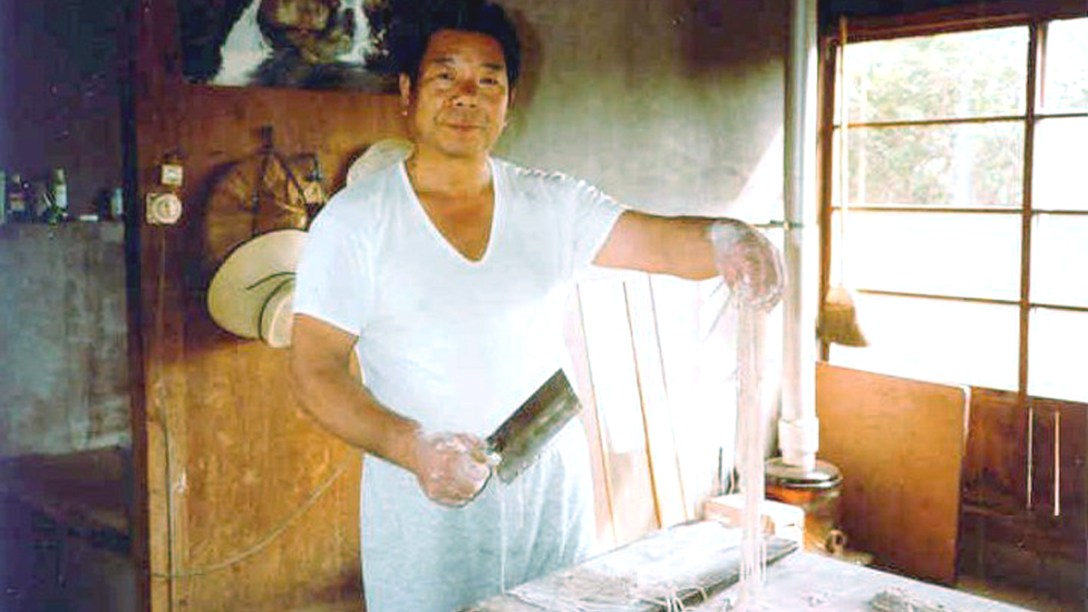
by SIMONE CHIERCHINI - Let’s return to the beginning of Fujimoto sensei’s adventure in Italy. We are going to quote from ‘Dalle Ciliegie al Palalido’ (From Cherries to the Palalido), an interview that Sensei gave to Gigi Borgomaneri in the early 1990s. It appeared in Aikido, a magazine published by the Italian Aikikai. When the interviewer asked Fujimoto sensei to recount some stories that defined the beginning of his experience in Europe this is the story he told
Autore: The Ran Network
Saito Sensei – The Man Behind the Teacher
by PAOLO CORALLINI & SIMONE CHIERCHINI - excerpt from "The Hermeticist - Interview with Paolo Corallini", the book interview published by Aikido Italia Network Publishing, captures the warm humanity of Morihiro Saito outside the dojo. Enjoy some delightful anecdotes narrated by Paolo Corallini as an appetizer to his book
The “Fujimoto Method”
by SIMONE CHIERCHINI - Excerpt from "The Sensei - About Yoji Fujimoto", the book interview realized by some of the senpai of Yoji Fujimoto sensei that will be released on February 15th. In this section, Simone Chierchini presents his testimony on the unique qualities of Fujimoto sensei's teaching, those that have formed the backbone of the unrivalled "Fujimoto Method"
Il “Metodo Fujimoto”
di SIMONE CHIERCHINI - Tratto da "Il Sensei - A Proposito di Yoji Fujimoto", il volume realizzato da alcuni senpai del Maestro, vi presentiamo questa testimonianza di Simone Chierchini sulle uniche qualità dell'insegnamento di Fujimoto sensei, quelle che hanno costituito l'ossatura dell'inarrivato "Metodo Fujimoto"
Il Rapporto Maestro-Allievo nelle Arti Marziali
di SIMONE CHIERCHINI - André Cognard è una delle voci contemporanee più autorevoli nell’ambito del Budo internazionale. Insegnante “itinerante”, profondo conoscitore del Giappone e delle sue tradizioni, André Cognard ha portato in tutto il mondo la tecnica del suo maestro, Hirokazu Kobayashi, il messaggio umano che l’Aikido è al servizio di tutti e il messaggio spirituale che la nostra disciplina diventa semplicemente Arte una volta che si ricongiunge a se stessa. Questo testo, tratto da "Il Filosofo", libro intervista pubblicato nel 2021 da Aikido Italia Network Publishing, presenta il rapporto maestro-allievo da una affascinante e inconsueta prospettiva
Arrested Development
di SIMONE CHIERCHINI - Taken from "The Translator", the book-interview produced by Aikido Italia Network Publishing, this chapter deals with the thorny issue of the development of Aikido or rather its current non-development. Has the practice of our Art become crystallized and a sort of Takemusu Aiki in reverse? We asked Christopher Li, an aikidoka who describes himself as a "hobbyist with a speciality". Through his research and writings, Chris has made an important contribution to the understanding of modern Aikido. His views on Aikido, its history and future developments are unconventional and often "politically incorrect", but he is not afraid to share them. This chapter of "The Translator", like the rest of the book, is not easy reading for those unwilling to discuss the official narrative of our art and its people…
L’Uomo Saito
di SIMONE CHIERCHINI - Sul Morihiro Saito "Maestro" si sono scritti interi volumi. Nel capitolo "L'Uomo Saito" qui presentato, un estratto da "L'Ermetista - Intervista a Paolo Corallini", libro-intervista pubblicato da Aikido Italia Network Publishing, si coglie la calda umanità di Morihiro Saito fuori dal dojo. Godetevi alcuni gustosi aneddoti narrati da Paolo Corallini come antipasto al suo libro, acquistabile su Amazon
Il Kototama
di SIMONE CHIERCHINI - Abbiamo il piacere di presentare "Il Kototama", interessante capitolo tematico tratto dal libro-intervista "Il Ricercatore - Intervista a Luigi L. Gargiulo", pubblicato nel 2021 da Aikido Italia Network Publishing. O-sensei creò l'Aikido come mezzo per realizzare il Kototama, ma il potere magico del suono è stato a lungo un mezzo di pratica spirituale fin dagli albori della civiltà umana. Il logos biblico, "In principio era il Verbo", veniva tramandato in India già nel 400 aC nei Veda, il libro sacro dell'India. Luigi L. Gargiulo qui ci offre una ricca introduzione alla pratica del Kototama
The Training Culture at the Aikikai Hombu Dojo
SIMONE CHIERCHINI - William T. Gillespie cast aside all the enviable benefits and considerable comforts of life in Southern California to move to Tokyo to devote himself to intensively study Aikido at the Aikikai World Headquarters (1997). Currently a 6th Dan Aikikai, his martial arts adventures in Japan and beyond to South East Asia, Korea and even The People’s Republic of China became a fantastic journey of self-discovery and personal development that continues to unfold. Taken from "The Traveler - Find Tour Way, Aikido Italia Network Publishing book-interview with WT Gillespie, here's an interesting excerpt about what William thinks about training at the Hombu
Aikido and Parenting
by SIMONE CHIERCHINI - I am an ''egoist'', I don't teach out of ''vocation''. I don't teach because I wish to make the world a better place, or change people's lives or anything like that. I always trained in Aikido first and foremost for my enjoyment and personal growth. Consequently, as a teacher, I have never felt I was or had to be anyone's father, not to mention felt somewhat responsible for influencing the lives of my students