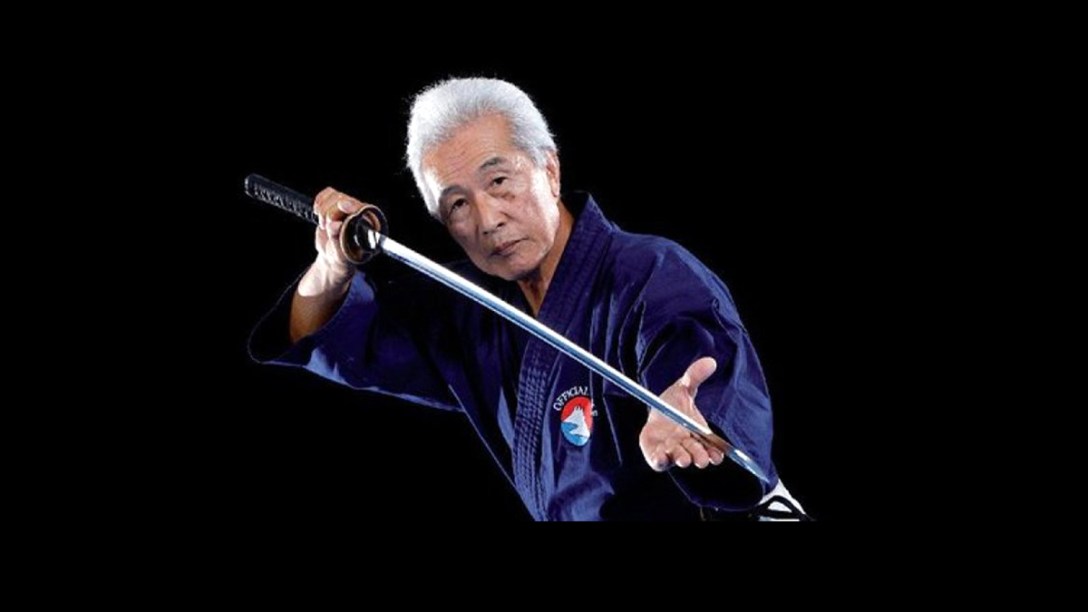
Hiroo Mochizuki Sensei, a Teacher for Europe

by ADRIANO AMARI - Hiroo Mochizuki emerges as a bridge between East and West, bringing authentic Japanese martial traditions to Europe not as mere techniques, but as a living path. This article retraces his journey—from rigorous training in Japan under revered masters to the founding of federations and Dojos on European soil—and highlights how his approach grounded in integrity, adaptability and depth helped shape modern martial-arts practice on the continent. Here, teaching becomes less about authority and more about guiding individuals to meet the demands of their time with discipline, humility and clear vision.
Arrested Development

di SIMONE CHIERCHINI - Taken from "The Translator", the book-interview produced by Aikido Italia Network Publishing, this chapter deals with the thorny issue of the development of Aikido or rather its current non-development. Has the practice of our Art become crystallized and a sort of Takemusu Aiki in reverse? We asked Christopher Li, an aikidoka who describes himself as a "hobbyist with a speciality". Through his research and writings, Chris has made an important contribution to the understanding of modern Aikido. His views on Aikido, its history and future developments are unconventional and often "politically incorrect", but he is not afraid to share them. This chapter of "The Translator", like the rest of the book, is not easy reading for those unwilling to discuss the official narrative of our art and its people…

Chinkon Kishin No Ho

by GÉRARD BLAIZE - Most Aikido students today still begin their classes by performing exercises that combine body movements, word pronunciation, breathing combined with visualization, similar to those practiced by the founder of Aikido. These exercises are referred to in Japan as Chinkon Kishin No Ho (鎮魂帰神の方), i.e. "The Method for Calming the Soul and Returning to the Divine". This definition will surprise many aikido students who probably had no idea of the purpose of these exercises. What are these exercises? Where do they come from? How come that they are still practiced today? What is their purpose?

The Training Culture at the Aikikai Hombu Dojo

SIMONE CHIERCHINI - William T. Gillespie cast aside all the enviable benefits and considerable comforts of life in Southern California to move to Tokyo to devote himself to intensively study Aikido at the Aikikai World Headquarters (1997). Currently a 6th Dan Aikikai, his martial arts adventures in Japan and beyond to South East Asia, Korea and even The People’s Republic of China became a fantastic journey of self-discovery and personal development that continues to unfold. Taken from "The Traveler - Find Tour Way, Aikido Italia Network Publishing book-interview with WT Gillespie, here's an interesting excerpt about what William thinks about training at the Hombu

Aikido and Parenting

by SIMONE CHIERCHINI - I am an ''egoist'', I don't teach out of ''vocation''. I don't teach because I wish to make the world a better place, or change people's lives or anything like that. I always trained in Aikido first and foremost for my enjoyment and personal growth. Consequently, as a teacher, I have never felt I was or had to be anyone's father, not to mention felt somewhat responsible for influencing the lives of my students

The “Meditation Cats” Story and the “Blind Alleys” in Martial Arts

by ADRIANO AMARI - In the history of Mankind, a cursory fact or the reaction to false or inaccurate information often became a consolidated habit without anybody realising it. Even though the above is mostly the result of a misunderstanding and it is due to a superficial attitude or the need to conform, its outcome ascends to indisputable truth, pseudo-sanctified and handed down over time

The Translator – Interview with Christopher Li

di SIMONE CHIERCHINI - Christopher Li calls himself a "hobbyist with a specialty", however, thanks to his research and writing he has given an important contribution to the understanding of modern Aikido. His views on Aikido, its history and future developments are unconventional and often "politically incorrect" but he's not afraid to share them. This is not an interview for those unwilling to discuss the official narrative of our art and its people…

Aikido and Open-Mindedness

by MATTHIEU JEANDEL - If the SHU-HA-RI progression is understood, each has their own place in the progression and conservation of an Art. Today, however, there is no administrative body that supports training on the basis of this principle. Currently, behind the cover of open-mindedness, the administrative entities do not realize the limits they foster and the relative loss in the technical, historical and philosophical fields of Aikido

The Phenomenologist – Interview with Ellis Amdur

by SIMONE CHIERCHINI - Ellis Amdur is a renowned martial arts researcher and a teacher in two different surviving Koryu. His books on Aikido and Budo are considered unique in that he uses his personal, often shocking or outrageous, experiences as illustrations of the principles he writes about, but he is also backed by solid research and experience in the field. "The Phenomenologist" is no exception: it is a distillation of Ellis Amdur's thoughts, insights and opinions on Aikido and Budo. "The Phenomenologist" has achieved considerable success in its Italian version, also published by Aikido Italia Network Publishing. Here you can read an excerpt of the book, which can be ordered in its full version on amazon.com in both paper and Kindle format