
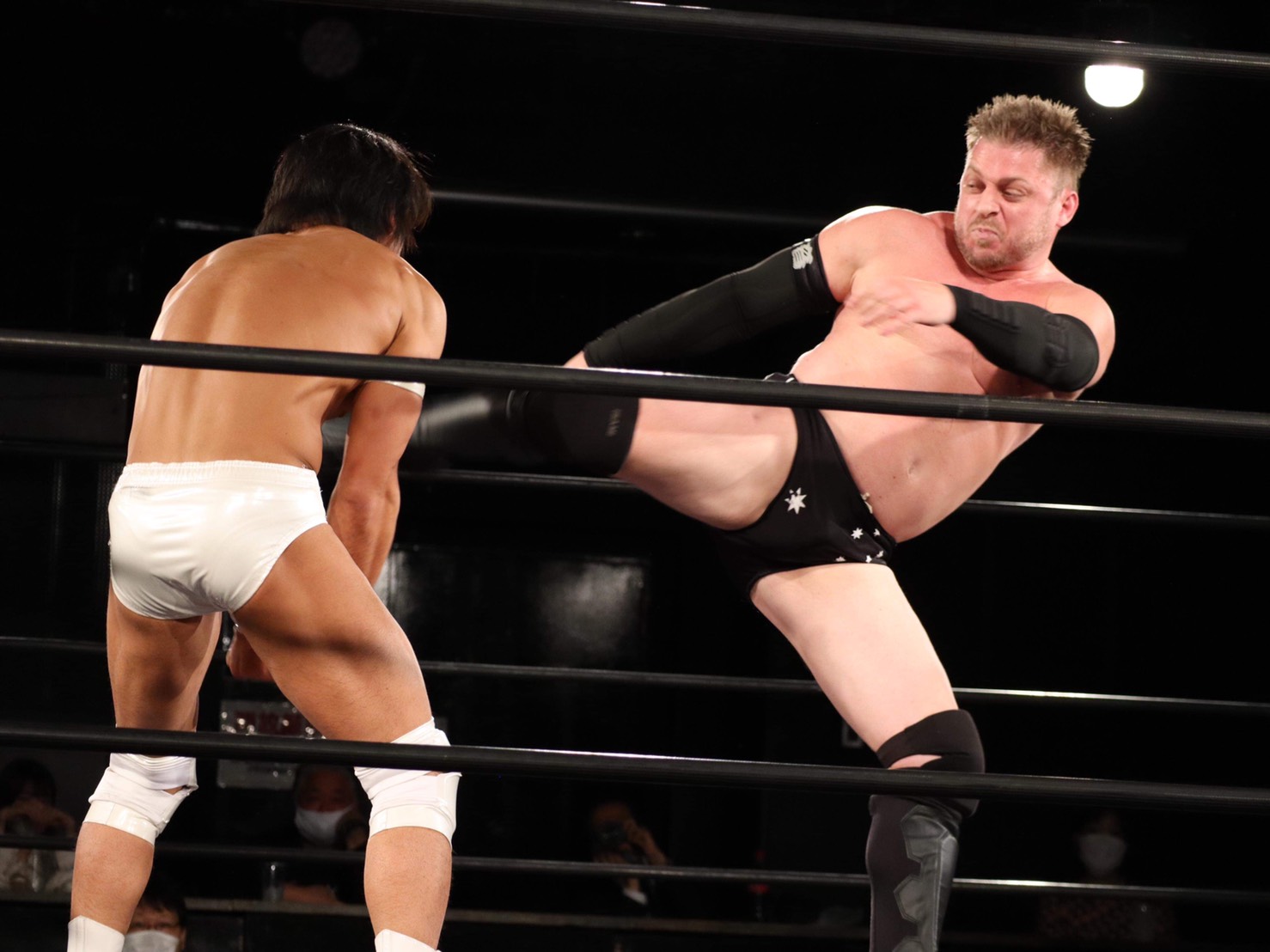
From Taekwondo wonder kid to Karate State Champion, from H. Tada Sensei’s Gessoji Dojo to the Aikikai Hombu Dojo and Y. Yokota sensei, Rionne “Fujiwara” McAvoy, a former Pacific Pro Wrestling Heavyweight Champion, has never been one for finding the easy way out. As part of “The Aiki Healings”, the online encounters hosted by Aikido Italia Network, let’s hear him tell his story in martial arts and his strong views on Aikido, physical training, cross-training and where he wants to go with his Aikido
di SIMONE CHIERCHINI
CHIERCHINI
Friends of Aikido Italia Network, welcome and happy Sunday to you all. This is Simone Chierchini. You’re watching the third session of “The Aiki Healings”. These are our online meetings aimed at bringing about good positive, energy in these uncertain times. Today our guest is Rionne McAvoy. Hi Rionne, how are you doing?

McAVOY
Hey, hello. This is really exciting. Thank you for having me.
CHIERCHINI
I am very pleased to have you. For for a while now we’ve been chatting over the net. We’ve been talking about Budo, Aikido and many other things that we cannot say here, in public.
McAVOY
Yes!
CHIERCHINI
Finally, we connected. It was quite natural to bring our conversation here and to share some of Rionne’s views with you.
I think the first thing to do to help those that are not familiar with Rionne’s path in martial arts may be a good idea to start from the beginning. So maybe Rionne if you want to tell us a couple of words about your early years in Australia? Personally, by reading your article “Issatsu no Shunkan“, it was easy enough to see for me how your father’s figure was essential in directing you towards martial arts – and of course towards a certain concept of martial arts as a form of combat. Can you tell us something about him and how you experienced your approach to Budo through him?
McAVOY
My father was born during World War II and he didn’t meet his father until he was about two years old.
His father came back from the war and in those times all throughout Europe men were different. You had to be tough as nails and especially him growing up poor, no food, right after the war…
You know in the 50s and then into the 60s in England it was kind of the strongest survive, in his early days.
He decided that he wanted to leave England and he immigrated to Australia as a what they called a “10-pound pom”, which was a one-way ticket for 10 pounds, no return. To cut a long story short, he having done Taekwondo for a little bit, I came along. I was about eight years old when I went on a school trip – I wrote this in the article “Issatsu no Shunkan” – and I very stupidly said to a much larger boy (I think I was eight and he was 12) “You’re fat!”. He took one look at me, didn’t think twice, didn’t hesitate and just “Bang!”
I had a massive big eye out here. I was eight years old and my father wasn’t angry that I got in the fight, he wasn’t angry that I got hurt. He was angry that I didn’t fight back. And I said: “But… but.. papa, he’s so much bigger than me and he’s older than me…”. And he just said: “Right. Well, we’re going to put you in Taekwondo”. Because that’s what he had done, right? So we went down to the local Taekwondo club, which was in a high school near my house, and I very quickly went from an eight-year-old scared little boy to a 12-13-year-old in the Australian junior team for Taekwondo.
He had me kicking the bag, the heavy bag, an adult’s heavy bag for two hours a day. There was no such thing as school homework. Homework came after training. He would get home, he would have fruit on the table ready to go and it was kicking the bag. He’d come home from work and he’d watch me. Every now and then he’d peep out the window and just the sight of him looking at me, making sure I was kicking and punching the bag was enough to scare the hell out of me.
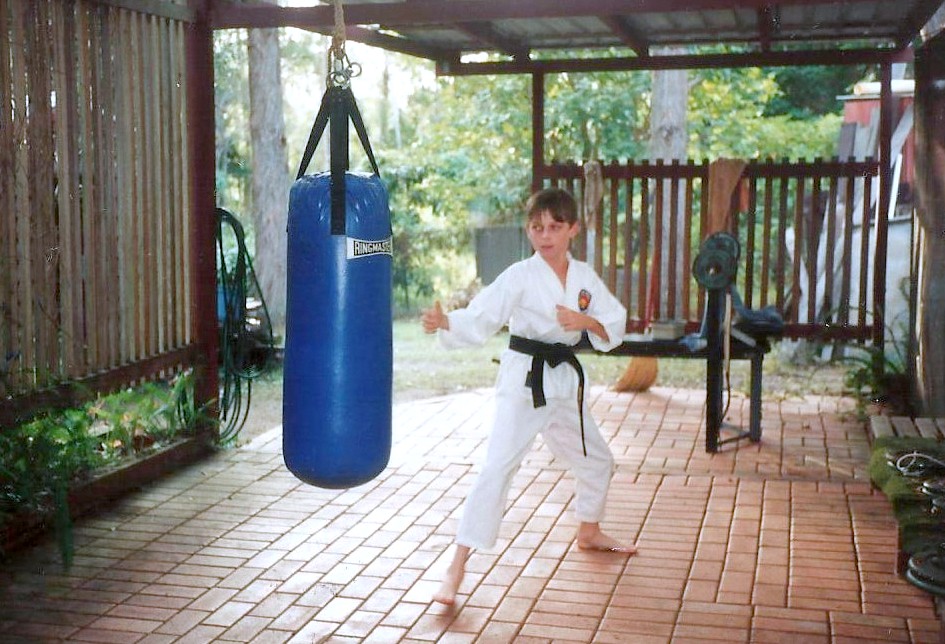
When I was doing Taekwondo, there was a woman there, also from England, who was doing Taekwondo and they got talking – because they were both English – and her husband, an Australian guy, was doing Aikido. He said: “You know what? I wouldn’t mind doing Aikido”. So that was how he started his path of Aikido and kind of how I started mine, because I used to have to go down there. To be honest, it bored the hell of me, when I was a child, watching these adults do Aikido. It was so boring because I love to kick and punch – as all the kids watching young Jean Claude Van Damme and all those action stars of the 80s and 90s.
He would also hold the pads for me, when I was a child, to make sure that my roundhouse kicks were good and punches were pretty good. I was getting really really good at Taekwondo – I got second dan as a 13-year-old. They told me: “Two more years and when the Olympics accepts Taekwondo, if you’re old enough, you may be good enough, you may not be old enough, we’re not sure, but you’re definitely on the path to being in this Olympic team”.
We had this junior team, it was like a special, “generational team” they called it, where all the kids they’d pick out the ones for the future and try and train them in the anticipation that Taekwondo made the Olympics. It ended up making the Olympics, but I never got to see that, because as soon as he found out that there was a whole Olympic talk, he pulled me out and put me into Karate, as a 14-year-old. So, you can imagine, a bit of a swollen head, I was winning a lot of tournaments as a kid, black belt and he puts me back into Karate as a white belt.
I had to start all over again. But it was a good path and to cut a long story short, I ended up quitting that karate dojo. The only reason I went back – I quit when I was 17 and I went back when I was 19 – because of this old chat program, I don’t know if you remember it, it was called ICQ. Ever heard of that? I found my Karate sensei’s daughter on ICQ and I had a massive crush on her when I was a boy. I started chatting to her at ICQ and she said: “Why don’t you come down to the dojo?” I only went down to the dojo to see her, 19 years old you know… and without even knowing what happened, her mother had signed me up to enter the dojo again, as a 19-year-old.
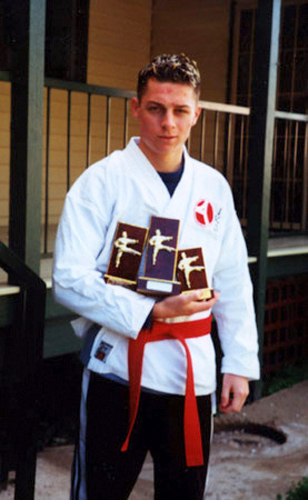
I ended up winning my state championships as an orange belt at 19 and that was when I decided to take my first trip to Japan.
CHIERCHINI
That was my next question. That was in 2001 I think, yeah?
McAVOY
Yes.
CHIERCHINI
You did your first stint in Japan and clearly, from what you just described, your idea of martial arts was dominated by the concept of fighting, competitions… anyway, everything was going through punching and kicking.
Nevertheless, you ended up enrolling at the Aikikai Hombu Dojo. We now know that this first experience you had at the Hombu Dojo was far from satisfactory and you gave it up soon enough. That said, it’s quite hard to figure this out.
McAVOY
As I was growing up, doing my kicking and punching, my father was also going through all the kyu grades and shodan, nidan of Aikido.
In Australia, it’s quite common to have a large swimming pool, so I was his uke in the swimming pool in the Australian summer. He’d do his entire Aikido tests on me in the pool. I vividly remember them: “Kick me as hard as you can!”. “Come, punch me! Come on, punch me!”. He’d do all his Aikido gradings in the swimming pool.
(…)
Read the full interview by purchasing “The Wrestler – Interview with Rionne ‘Fujiwara’ McAvoy”
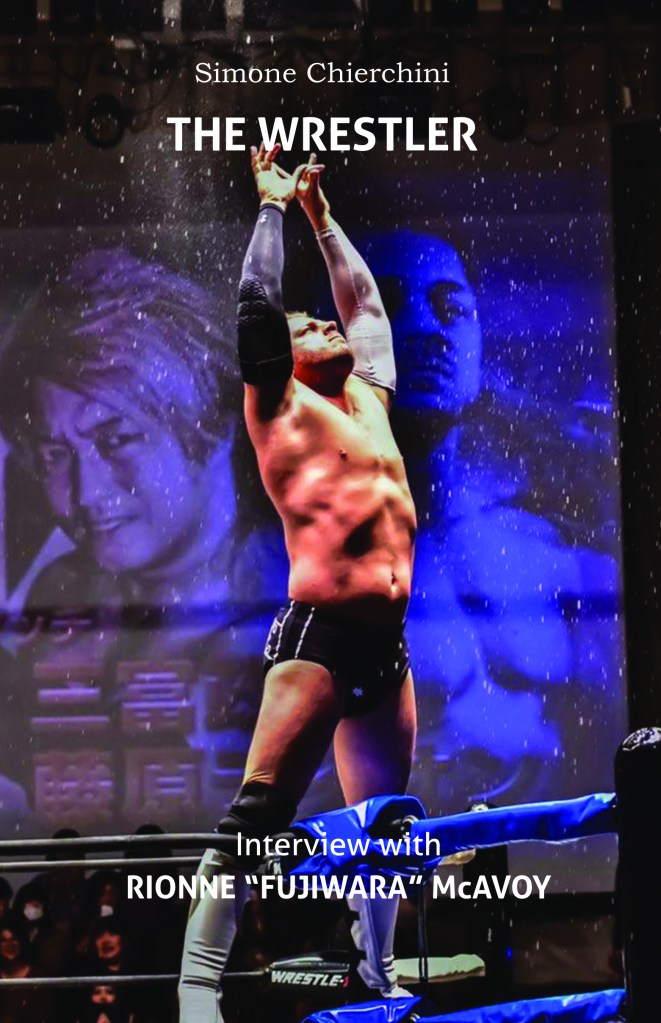
The Wrestler
Interview with Rionne “Fujiwara” McAvoy
The Aiki Dialogues #3
by Simone Chierchini, Rionne McAvoy
From Taekwondo wonder kid to Karate State Champion, from Hiroshi Tada Sensei’s Gessoji Dojo to the Aikikai Hombu Dojo and Yoshiaki Yokota sensei, Rionne “Fujiwara” McAvoy, a star in the toughest professional wrestling league in the world – Japan, has never been one for finding the easy way out.
In “The Wrestler”, Rionne McAvoy tells his story in martial arts and explains his strong views on Aikido, physical training and cross-training and reveals where he wants to go with his Aikido.
Table of Contents
Preface
Introduction
The Way of the Father
Japan Enters the Equation
Training at the Gessoji Dōjo
Between a Rock and a Hard Place
From Yokota Sensei’s Aikido to Professional Wrestling
Is Aikidō Still an All-Encompassing Budō?
The Struggle of Being an Aikidoka and a Martialist
The Knights of the Blunt Edge Growing Up
Teaching Methodologies
The Good and the Bad of the Hombu Dōjo
Training and Teaching in Our Dysfunctional Family
Your Body Is Your Temple
Planning the Future
 Aikido Italia Network