
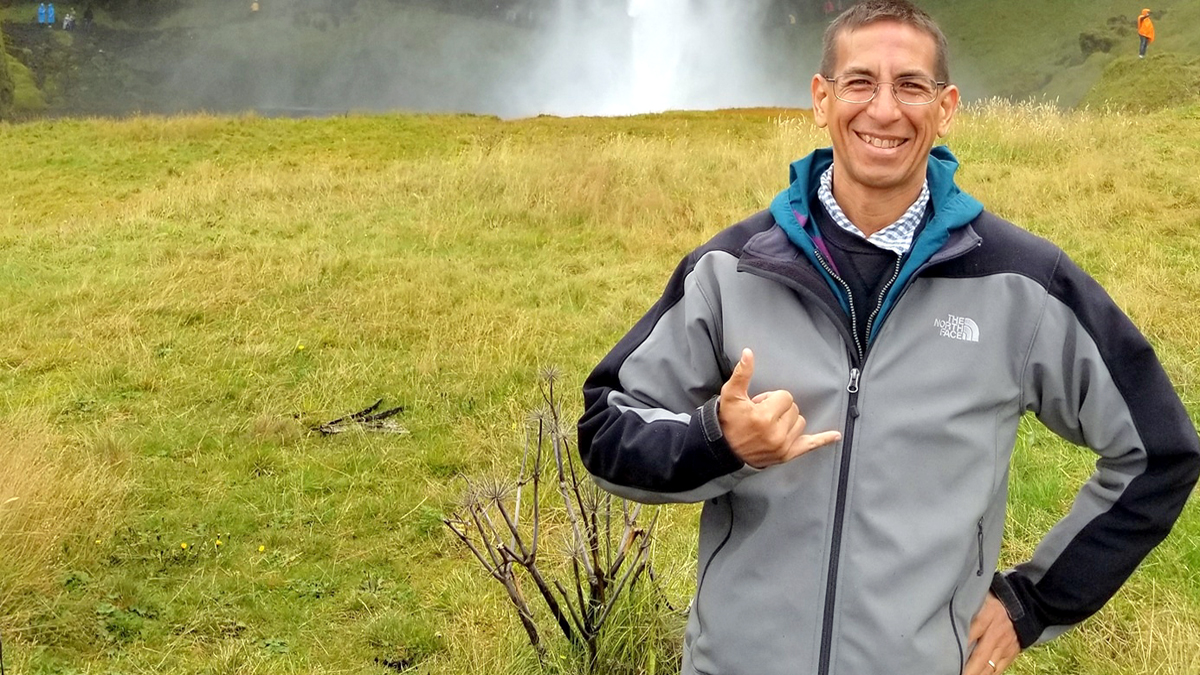
Christopher Li calls himself a “hobbyist with a specialty”, however, thanks to his research and writing he has given an important contribution to the understanding of modern Aikido. His views on Aikido, its history and future developments are unconventional and often “politically incorrect” but he’s not afraid to share them. This is not an interview for those unwilling to discuss the official narrative of our art and its people…
di SIMONE CHIERCHINI
CHIERCHINI
Hello everyone you’re watching “The Aikido Healings” and you’re on Aikido Italia Network with Simone Chierchini. Today my guest for this session is Christopher Li. Welcome to you, Chris. How are you doing?
LI
Good, thank you. Thank you for having me.
CHIERCHINI
It’s a pleasure. Chris, just to start, to warm up the atmosphere, could you kindly give us an overview of your experiences in Aikido and Budo so far?
LI
OK. I started Aikido in 1981, so I’m old, right, not as old as some people but pretty old. I trained first on the US mainland. I started with a student of Mitsugi Saotome and all my first ranks came from Saotome sensei. Then, in ’82 I went to Japan for a short time after I first started Aikido – I think I was 5th – and I went with Yamada sensei, which is another story because Yamada and Saotome at the time were not very friendly. They’re probably not very friendly now either but I’m kind of apart from that now. That was just for a short time for about three months and I trained at the Aikikai Hombu Dojo knowing nothing at all, thrown into the mix, which was fun but in retrospect, I’m not sure I’d do it again.
Then, in 1989 I moved back to Japan after college and I ended up staying for a long time, all together maybe about 15 years. Then eventually I came back to Hawaii. During that time, I practised mostly Aikido Aikikai, also in Japan I experimented a lot: Yoshinkan, Iwama, I did a couple of different forms of Daito-ryu. I saw koryu, bujutsu…
Coming back to Hawaii, I studied some Chinese Arts as well and then since about 2010 I’ve been training with Dan Harden if anybody knows who Dan Harden is. Some people are in if they’re on the internet, some people if they’re off the internet maybe have no idea. In 2011 we started our own group, Aikido Sangenkai. We’ve been training since then, it’s an Aikido group where we focus mostly on Dan Harden’s method of training. It’s maybe a little bit unorthodox but we enjoy it.
And that takes up to the present. I think if you’re on social media you’ve probably seen me posting around. I have an interest in Japanese history, especially the history of Aikido. I kind of fell into that through online discussions, in part. If anybody remembers Aikido-L, it was an old mailing list on a listserve for Aikido people, if people remember when people use listservs, and we would talk about whatever – bullshit, mostly, and argue a lot.
CHIERCHINI
It really interests me because I followed more or less the same footsteps: the Aikido-L list etc. And the funny thing is that today there’s a lot of people out there that refer to us bloggers as historians of Aikido and that always makes me laugh because we’re like some kind of Stanley Pranin. Maybe it’d be more appropriate to call us Aikido communicators or something like that. This passion of yours for researching, where does come from?
LI
Oh, where does it come from? I don’t know! I mean, we started discussing things and then… When I started, we didn’t know anything. Nobody knew nothing about nothing. I think Stan Pranin had a couple of those Aiki News magazines out and they looked like they were from a copy machine – that was before he had the nice print edition – and there was some information coming out. There were a couple of books that weren’t very good, John Stevens came out with his book about Shirata sensei and they had a short biography of Morihei Ueshiba in the beginning. At that time we called it “The Biography of Morihei Ueshiba”, even though what you see in that book it’s mostly just pictures of Shirata showing techniques, because there really were no good biographies, no detailed biographies.
Of course, we’d talk on the internet and then we’d talk and I’d read more, I’d read more about Stan Pranin and then I really started getting into it more heavily when my Japanese got better. So when we moved to Japan the second time, when my wife’s mother became ill and we went back to Japan, and my Japanese was getting better, I read more Japanese, I started reading a lot of things. I was able to read a lot of original sources and books on Aikido and other things that I hadn’t been able to read before. In combination with online discussions, I guess that really got moving. Also Stan Pranin, of course, was providing a huge wealth of material by that point (…)
To access the full version, purchase “The Translator – Interview with Christopher Li”
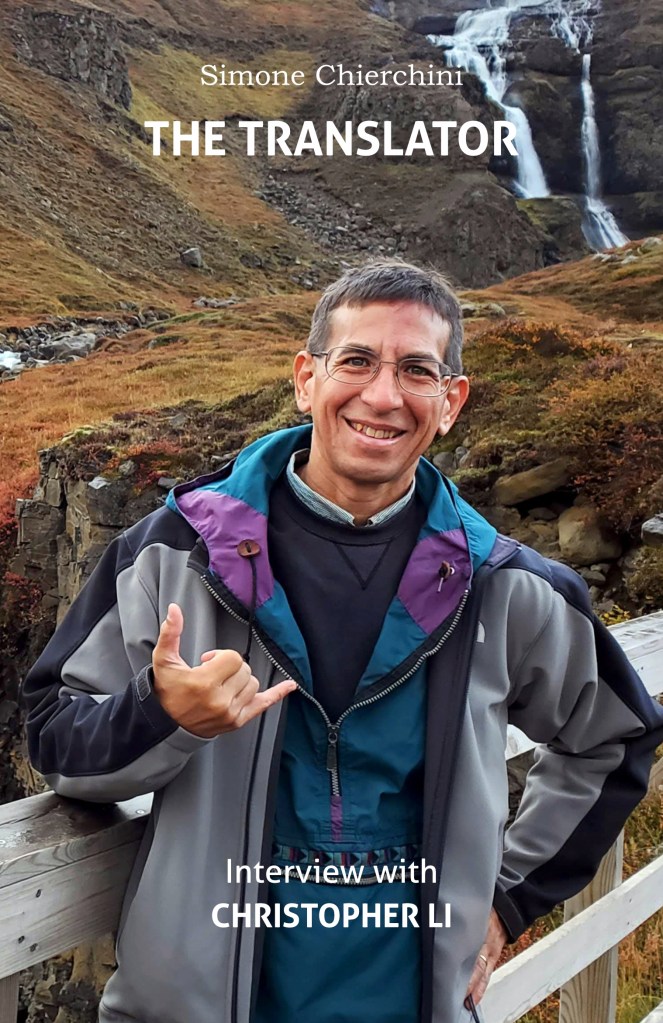
The Translator
Interview with Christopher Li
The Aiki Dialogues #2
by Simone Chierchini, Christopher Li
Christopher Li is an instructor at the Aikido Sangenkai, a non-profit Aikido group in Honolulu, Hawaii, on the island of Oahu. He has been training in traditional and modern Japanese martial arts since 1981, with more than twelve years of training while living in Japan.
Chris calls himself a “hobbyist with a specialty”, however, thanks to his research and writing he has made an important contribution to the understanding of modern Aikido. His views on Aikido, its history and future development are unconventional and often “politically incorrect” but he’s not afraid to share them.
This is not a book for those unwilling to discuss the official narrative of our art and its people.
Table of Contents
The Aikidō Path So Far
Historians vs Communicators in Aikidō Lost in Translation
The “Philosophy” of the Founder
Taking Responsibility
Tori and Uke
The Internal-External Power Dichotomy Everyone Is Showing Aiki
The Role of Aikido in Contemporary Society
Morihei Ueshiba and Daitō-Ryū
Was Kisshomaru the Actual Innovator? Are Gradings and Rank a Necessary Evil in Aikido?
The Truth About Cross-Training
What Is Aikidō and What Is It For? Arrested Development
The Importance of Keeping a Martial Edge
 Aikido Italia Network
[…] Christopher Liwith Simone Chierchini – 9 pm ITA […]